
• English
  • 中文
  • Français
  • Deutsch
  • Español
  • Português
  • 日本語
  • 한국어
  • Nederlands
  • Türkçe
  • Bahasa Indonesia
  • ไทย
Ruijin precision manufacturing
Precision Motion Components精密运动组件

CNC Machined Robotics Components机器人 CNC 组件

We machine precision structural and motion components for robotics — joint housings, end-effectors and mounting plates in aluminum and stainless steel with tight geometric tolerances.

我们为机器人加工精密结构与运动组件——关节外壳、末端执行器与安装板,采用铝与不锈钢,几何公差严格。

Why Ruijin为何选择锐金

23+Years年经验
200+CNC MachinesCNC 设备
±0.01mmTolerance加工公差
24hQuote报价响应

Certifications认证资质

IATF 16949ISO 9001ISO 13485

Typical Robotics Parts

典型机器人零件

Precision parts we produce for OEM/ODM customers worldwide.

我们为全球 OEM/ODM 客户加工的精密零件。

Robot Joint Parts

Robot Joint Parts

机器人关节件

Precision CNC machined robot joint parts for OEM/ODM customers.

为 OEM/ODM 客户加工的精密 机器人关节件。

±0.01mm±0.01mm
End-Effectors

End-Effectors

末端执行器

Precision CNC machined end-effectors for OEM/ODM customers.

为 OEM/ODM 客户加工的精密 末端执行器。

Aluminum铝合金
Mounting Plates

Mounting Plates

安装板

Precision CNC machined mounting plates for OEM/ODM customers.

为 OEM/ODM 客户加工的精密 安装板。

Anodized阳极氧化
Structural Housings

Structural Housings

结构外壳

Precision CNC machined structural housings for OEM/ODM customers.

为 OEM/ODM 客户加工的精密 结构外壳。

5-Axis五轴

Technical Capabilities

技术能力

Material材料Aluminum 6061/7075, stainless 304/316铝 6061/7075、不锈钢 304/316
Tolerance精度±0.01 mm standard标准 ±0.01mm
Process工艺3/4/5-axis CNC milling & turning三/四/五轴 CNC 铣削与车削
Finishes表面处理Anodizing, hard anodizing, powder coating阳极氧化、硬质阳极氧化、粉末喷涂
Complexity复杂度Complex curved surfaces & deep pockets复杂曲面与深腔加工

Applications

应用场景

Industrial Robots

工业机器人

Joint housings, link plates and wrist parts.

关节外壳、连杆板与腕部零件。

Collaborative Robots

协作机器人

End-effectors and sensor mounts.

末端执行器与传感器支架。

Automation

自动化设备

Mounting plates, brackets and fixtures.

安装板、支架与工装夹具。

CNC Machined Robot Joints: Where the Tolerance Actually Bites

CNC 加工机器人关节:公差真正咬人的地方

Bearing seats and mounting faces decide whether a joint runs quiet or noisy.

轴承座孔与安装面,决定一个关节是安静运转还是噪音不断。

CNC machined robot joints fail in the same two places almost every time: the bearing seat and the mounting face. A joint housing carries the output of a harmonic drive or a planetary reducer, so the bore that locates the bearing and the face that bolts to the next link have to be concentric and square. When they are not, the reducer sees a side load it was never sized for, backlash grows, and the joint starts to sing under load. We machine these features in one set-up on a 5-axis machining centre, holding bearing-seat coaxiality and mounting-face flatness within ±0.01 mm and quoting the geometric callouts on your drawing rather than a shop default.

CNC 加工的机器人关节出问题,几乎总是出在同样的两个地方:轴承座孔和安装面。关节外壳要承载谐波减速机或行星减速机的输出,因此定位轴承的那个孔、以及与下一节臂连接的那个面,必须同轴且垂直。做不到时,减速机就会承受一个设计上从未考虑的侧向载荷,回差随之增大,关节在负载下开始异响。我们在五轴加工中心上一次装夹完成这些特征,同轴度与安装面平面度控制在 ±0.01 mm 以内,并按图纸上的几何标注报价,而不是套用车间默认值。

Material is a stiffness decision before it is a strength one. 6061-T6 is the default for joint housings and link arms: it machines cleanly, anodizes predictably and still welds when a design needs it. 7075-T6 raises yield strength by roughly 80% over 6061-T6 at the same wall thickness, which matters on a long link arm where deflection sets the limit rather than stress, but it is the wrong alloy to specify on a welded assembly. Where a joint works near food, medical or wash-down, 304 or 316 stainless replaces aluminum at close to three times the weight, and the walls get thinner to pay for it — on milled features we hold 0.5 mm walls in aluminum and 1.0 mm in steel.

选材料首先是刚度问题,其次才是强度问题。关节外壳与连杆臂默认用 6061-T6:切削顺畅、阳极氧化表现稳定,设计需要时还能焊接。7075-T6 在相同壁厚下的屈服强度比 6061-T6 高出约 80%,这对长连杆臂很关键 —— 那里限制壁厚的是挠度而不是应力;但焊接组件就不该选它。当关节用于食品、医疗或需要冲洗的场合,就改用 304 或 316 不锈钢,代价是重量接近铝的三倍,只能靠减薄壁厚来补:铣削特征上我们能做到铝 0.5 mm、钢 1.0 mm 的壁厚。

The third lever is how many parts the joint becomes. Every split between housing, adapter plate and bearing cap adds a bolt circle, a dowel pair and a tolerance stack, and each one is a place where the assembly can lose a hundredth of a millimetre. Where the geometry allows it, we machine the housing and the mounting face as one part and pocket the weight out instead. For wear surfaces on aluminum joints — a bearing bore, a cable race, a sliding face — hard anodizing to MIL-PRF-8625 Type III gives a 13–114 µm layer in the 500 VPN range, and we machine the bore to final size after coating when the fit demands it.

第三个杠杆是这个关节被拆成了几个零件。外壳、转接板、轴承端盖每多一道分界,就多一圈螺栓孔、一对定位销和一道公差链,而每一处都是装配可能丢掉一丝的地方。只要几何允许,我们会把外壳和安装面做成一个零件,再用挖腔把重量降下来。铝制关节上的耐磨面 —— 轴承孔、走线槽、滑动面 —— 按 MIL-PRF-8625 Type III 做硬质阳极氧化,可获得 13–114 µm、硬度在 500 VPN 量级的膜层;配合要求高时,我们在镀层之后再把这个孔加工到最终尺寸。

From One Prototype to a Repeatable Batch

从一件样机到可重复的批量

Robotics programmes rarely go straight to volume — and machining suits that shape of demand.

机器人项目很少直接上量 —— 而加工正好适合这种需求曲线。

The usual shape is one to five prototypes for fit and stiffness testing, a pilot run of 20 to 50 while the control loop is tuned, then a production release that may never pass a few hundred pieces a year per axis. Machining suits that demand curve because there is no tooling to amortize: the same verified program that cut the prototype cuts the two-hundredth part, and a design change costs a program edit rather than a new die. Send a STEP file and you get a free DFM review and a firm quote within 24 hours.

典型节奏是先做 1 到 5 件样机验证配合与刚度,再做 20 到 50 件的小批用来调控制回路,最后才量产 —— 而每条轴一年的量可能也就几百件。加工正好适合这条需求曲线,因为没有模具需要摊薄:切样机的那套已验证程序,同样用来切第二百件;设计变更的成本是一次程序修改,而不是一副新模具。发 STEP 文件过来,含免费 DFM 评审,24 小时内出正式报价。

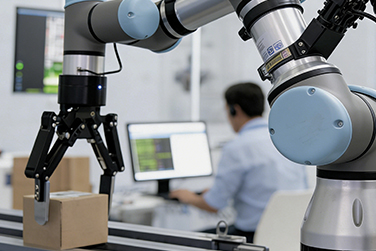
End-effectors follow a different rhythm. Gripper fingers, vacuum manifold blocks, sensor brackets and camera mounts get revised late and often, because they are the parts that meet the product and the product keeps changing. We machine them from 6061-T6, from 304 stainless when the gripper works wet, and from engineering plastics such as POM or PEEK when the payload budget or electrical insulation decides it. For the structural side of the same machine, our robot joint machining guide sets out the tolerance and set-up rules feature by feature.

末端执行器的节奏又不一样。夹爪、真空气路块、传感器支架和相机支架往往在后期反复修改,因为它们是直接接触产品的零件,而产品一直在变。我们用 6061-T6 加工它们,夹爪在潮湿环境工作时改用 304 不锈钢,当载荷预算或电气绝缘成为决定性因素时则改用 POM 或PEEK 这类工程塑料。同一台设备的结构件部分,机器人关节加工指南按特征逐条给出了公差与装夹规则。

Frequently Asked Questions

常见问题

Can you machine complex robot joint geometry?能否加工复杂机器人关节结构?

Yes — 5-axis CNC handles complex curved surfaces, deep pockets and tight perpendicularity for joint components.可以。五轴 CNC 可加工复杂曲面、深腔与高垂直度关节件。

What materials do you use for robotics?机器人件用哪些材料?

6061/7075 aluminum for lightweight structure, 304/316 stainless for strength and corrosion resistance.轻量结构用 6061/7075 铝,强度与耐腐蚀用 304/316 不锈钢。

Do you support small-batch robotics parts?是否支持小批量机器人件?

Yes — 1-piece prototypes to small and medium batches.支持 1 件打样到中小批量。

What tolerance can you hold?公差能做到多少?

±0.01mm standard, ±0.005mm achievable on critical features.标准 ±0.01mm,关键特征可达 ±0.005mm。

Do you make CNC machined robot joints?你们做 CNC 加工的机器人关节吗?

Yes. CNC machined robot joints, harmonic drive adapters and link arms in 6061-T6 or 7075-T6, holding coaxial bearing seats and mounting-face flatness within ±0.01 mm.做。CNC 加工的机器人关节、谐波减速机转接件与连杆臂,材料 6061-T6 或 7075-T6,同轴轴承座孔与安装面平面度控制在 ±0.01 mm 以内。

What aluminum grade do you recommend for CNC machined robot joints?CNC 加工的机器人关节推荐用哪种铝?

6061-T6 for most joint housings and link arms: it machines cleanly, anodizes predictably and still welds. 7075-T6 when deflection rather than stress sets the wall thickness and nothing in the assembly is welded.关节外壳与连杆臂大多数用 6061-T6:切削顺畅、阳极氧化表现稳定,需要时还能焊接。当限制壁厚的是挠度而不是应力、且组件没有焊接时,用 7075-T6。

Can you machine bearing seats and harmonic drive adapters in one set-up?轴承座孔与谐波减速机转接件能在一次装夹内加工完吗?

Yes. On a 5-axis machining centre we hold bearing-seat coaxiality and mounting-face flatness within ±0.01 mm in a single set-up, so the two datums that decide reducer life are cut against each other rather than re-established on a second fixture.可以。在五轴加工中心上,我们在一次装夹内把轴承座孔的同轴度与安装面的平面度控制在 ±0.01 mm 以内,这样决定减速机寿命的两个基准是彼此相对加工出来的,而不是在第二套夹具上重新建立。

Do you machine end-effectors and gripper bodies as well as structural parts?除了结构件,你们也做末端执行器和夹爪本体吗?

Yes. Gripper fingers, vacuum manifold blocks, sensor brackets and camera mounts in 6061-T6, 304 stainless or engineering plastics such as POM and PEEK, from one-off prototypes to repeat batches.做。夹爪、真空气路块、传感器支架与相机支架,材料可选 6061-T6、304 不锈钢或 POM、PEEK 等工程塑料,从单件样机到重复批量都可以。

Need precision robotics parts?

需要精密机器人零件?

Get a QuoteFree DFM · 24h